
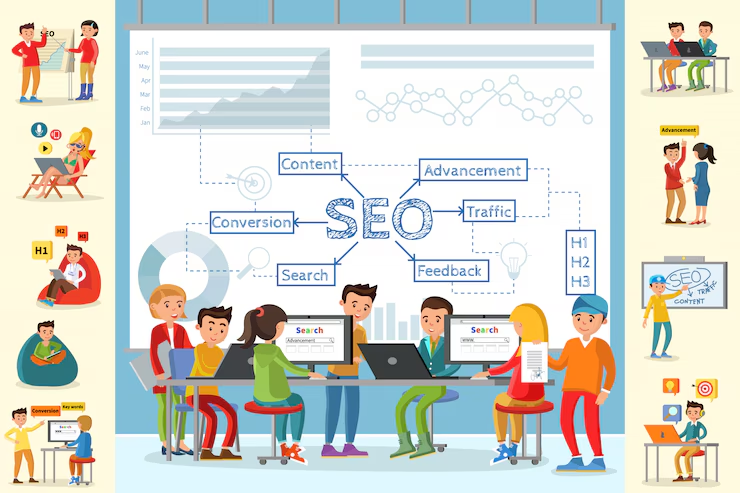
The world of SEO is always evolving, and staying ahead requires a deep understanding of on-page optimization techniques. However, for a marketer, web developer, or business owner, on-page SEO techniques can help your website rank higher, attract more visitors, and provide a better user experience.
Having a website alone won’t guarantee online success in 2025. Search engines like Google prioritize well-optimized, high-quality content that provides real value to users. That means businesses need to go beyond the basics and apply effective on- runner SEO strategies to stand out. From perfecting point structure to casting compelling content, on- runner SEO is essential for perfecting visibility, credibility, and engagement.
Google’s continuous algorithm updates and outdated techniques no longer work. Overused keywords, short content, and poor user experience can harm your ranking. Search engines now concentrate on factors such as page experience, applicability, and content authority.
This article will guide you through the most effective on-page SEO strategies for 2025, helping you stay ahead of the competition and ensure your website performs at its best.
What is On-Page SEO?
On-page SEO refers to the optimization techniques applied directly to your web pages to improve search engine rankings. Unlike off-page SEO, which involves backlinks and external factors, on-page SEO focuses on elements you can control—like content, meta tags, internal linking, and page speed.
Why On-Page SEO Matters in 2025
Google’s algorithms keep evolving, and they’re getting better at understanding content quality, user experience, and technical performance. That means it’s not just about using the right keywords—it’s about creating valuable content, making your site easy to navigate, and ensuring it runs smoothly.
- Improve search rankings
- Enhance user experience
- Increase organic traffic
- Boost engagement and conversions
Now, let’s dive into the top on-page SEO techniques you need to implement.
1. Improve Your Title Tags and Meta Descriptions
Your title tag is a key element of on-page SEO, serving as the first impression for both search engines and users.
A well-optimized title tag should be:
- Compelling: Make it engaging so users are encouraged to click.
- Keyword-rich: Naturally include your primary keyword for better visibility.
- Within 60 characters: Search engines truncate longer titles, so keep it concise.
Example:
✅ On-Page SEO Techniques: Renvation’s Guide for 2025
Along with a strong title, your meta description should give users a clear and enticing summary of your page. While it doesn’t directly impact rankings, a well-written meta description can improve your click-through rate (CTR).
A good meta description should:
- Be informative and engaging: Summarize your content in a way that sparks curiosity.
- Include relevant keywords: This helps match user intent in search results.
- Stay within 160 characters: Search engines cut off longer descriptions, so keep it concise.
Example Meta Description (160 characters with keywords):
“Learn on-page SEO techniques for 2025 with Renvation. Optimize your content, improve rankings, and boost traffic with expert strategies.”
By optimizing both your title tag and meta description, you can improve visibility, attract more clicks, and drive qualified traffic to your website.
2. Use Header Tags Properly
Headers (H1, H2, H3, etc.) structure your content and make it easier for search engines and users to navigate. Follow these guidelines:
- H1: Use only one per page, featuring your main keyword.
- H2 & H3: Organize sections logically and include related keywords.
- Readability: Keep headers clear and informative.
3. Focus on High-Quality Content
Content is king, but only if it’s valuable. Follow these best practices:
- Write for humans first: Google prioritizes user intent, so avoid keyword stuffing.
- Be comprehensive: Cover topics in-depth, answering common questions.
- Keep it engaging: Use storytelling, visuals, and examples.
- Maintain readability: Use short paragraphs, bullet points, and simple language.
4. Optimize Images with Alt Text
Images enhance user experience and make content more engaging, but search engines can’t “see” images the way humans do. Instead, they rely on alt text (alternative text) to understand what an image is about. Adding clear and descriptive alt text helps improve SEO, accessibility, and user experience.
Why Alt Text Matters:
- Improves SEO: Search engines use alt text to index images, helping them appear in image search results.
- Enhances Accessibility: Screen readers rely on alt text to describe images for visually impaired users.
- Provides Context if Images Don’t Load: If an image fails to display, alt text ensures users still understand its purpose.
Best Practices for Alt Text Optimization:
- Be descriptive but concise – Clearly explain what the image represents.
- Use keywords naturally –Avoid excessive use.
- Don’t use generic file names – Replace auto-generated names like “image123.jpg.”
Examples:
Poor Alt Text: alt=”image123.jpg” (Vague and unhelpful)
Good Alt Text: alt=”On-page SEO techniques infographic explaining optimization factors” (Descriptive and relevant to the content)
By optimizing image alt text, you make your website more accessible while improving your chances of ranking higher in both standard and image search results.
5. Improve URL Structure
A clean, keyword-rich URL structure improves both usability and rankings. Keep URLs:
- Short and descriptive
- Lowercase and hyphen-separated
- Free of unnecessary words and special characters
Example:
❌ www.renovation.com/page?id=12345
✅ www.renovation.com/on-page-seo-techniques
6. Leverage Internal Linking
Internal links guide users through your website and help search engines understand site structure. Best practices:
- Link to relevant pages.
- Use natural anchor text.
- Avoid overloading with too many links.
Example: “Learn more about SEO-friendly web design.”
7. Optimize Page Speed and Core Web Vitals
Google prioritizes fast-loading websites because page speed directly impacts user experience, engagement, and search rankings. A slow website annoys visitors, makes them leave, and reduces sales. To keep your site performing at its best, focus on optimizing speed and Core Web Vitals, which measure loading performance, interactivity, and visual stability.
How to Improve Page Speed:
- Compress images: Reduce file sizes without sacrificing quality using tools like TinyPNG or WebP format.
- Enable browser caching: Store static files in users’ browsers so they don’t have to reload every visit.
- Use a Content Delivery Network (CDN): Distribute your content across multiple servers worldwide to speed up loading times.
- Minimize JavaScript and CSS files: Remove unnecessary code, reduce HTTP requests, and use asynchronous loading for faster rendering.
How to Test and Improve Your Speed
Use Google PageSpeed Insights to analyze your website’s performance and get actionable recommendations. Aim for a 90+ score to ensure a smooth experience for visitors.
A fast website keeps users engaged, reduces bounce rates, and helps improve search rankings—making page speed optimization a critical part of your on-page SEO strategy.
8. Ensure Mobile-Friendliness
With mobile-first indexing, Google evaluates the mobile version of your site. Optimize for mobile by:
- Using a responsive design
- Improving touch-friendly navigation
- Optimizing mobile load times
9. Optimize for Featured Snippets
Google’s featured snippets appear at the top of search results. Increase your chances by:
- Answering questions concisely
- Using bullet points or numbered lists
- Structuring content with clear headings
Including testimonials and case studies
10. Implement E-E-A-T (Experience, Expertise, Authoritativeness, Trustworthiness)
Google uses E-E-A-T (Experience, Expertise, Authoritativeness, and Trustworthiness) to evaluate content quality and determine rankings. Websites that demonstrate credibility and reliability are more likely to rank higher, especially in industries like health, finance, and law.
To strengthen your E-E-A-T, focus on:
- Citing reputable sources: Back up claims with data, studies, or expert opinions to enhance trust.
- Showcasing author expertise: Include author bios highlighting credentials, experience, and industry knowledge.
- Adding testimonials and case studies: Real-world success stories and client reviews build credibility and social proof.
- Keeping content accurate and up-to-date: Regularly update articles to reflect current trends, research, and best practices.
- Securing your website (HTTPS): A secure site improves trust and protects user data.
By implementing E-E-A-T principles, you improve not only rankings but also user confidence, making visitors more likely to engage with and trust your content.
11. Encourage User Engagement
User engagement plays a crucial role in SEO and website performance. When visitors interact with your content—whether by clicking links, watching videos, leaving comments, or sharing posts—it signals to Google that your page is relevant and valuable. The more engagement your site receives, the better your chances of ranking higher in search results.
How to Boost Engagement:
- Use clear CTAs (Call-to-Action): Guide users on what to do next, whether it’s signing up, downloading a resource, or making a purchase.
- Add multimedia (videos, infographics, images): Visual content makes pages more engaging and keeps visitors on your site longer.
- Encourage comments and discussions: Ask open-ended questions and invite users to share their thoughts.
- Include social sharing buttons: Make it easy for users to share your content on social media platforms.
- Improve readability: Use short paragraphs, bullet points, and headings to make content easy to scan and digest.
A well-engaged audience not only helps with SEO but also builds a loyal community around your brand, increasing return visitors and conversions.
Conclusion
On-page SEO techniques are the foundation of any successful digital strategy. By optimizing title tags, content, images, URLs, and technical factors, you can improve your website’s visibility and user experience in 2025. Start implementing these strategies today to stay ahead in search rankings!
Want to improve your website’s SEO? Start optimizing today with expert SEO strategies from Renvation and drive more traffic, visibility, and growth! Book a free consultation now!
FAQs
1. When can I expect results from on-page SEO?
On-page SEO improvements can take a few weeks to a few months to reflect in rankings, depending on competition and indexing speed.
2. How many keywords should I use on a page?
Use a primary keyword naturally and include related terms. Focus on readability rather than keyword stuffing.
3. Is on-page SEO more crucial than off-page SEO?
Both are important. On-page SEO ensures a strong foundation, while off-page SEO builds authority through backlinks.
4. Do meta descriptions impact rankings?
While not a direct ranking factor, compelling meta descriptions improve click-through rates, indirectly boosting SEO.
5. How regularly should I update my on-page SEO?
Regularly review your content and optimize it based on new SEO trends, algorithm updates, and performance data.
By following these on-page SEO techniques, you can future-proof your website and maintain strong search engine visibility!